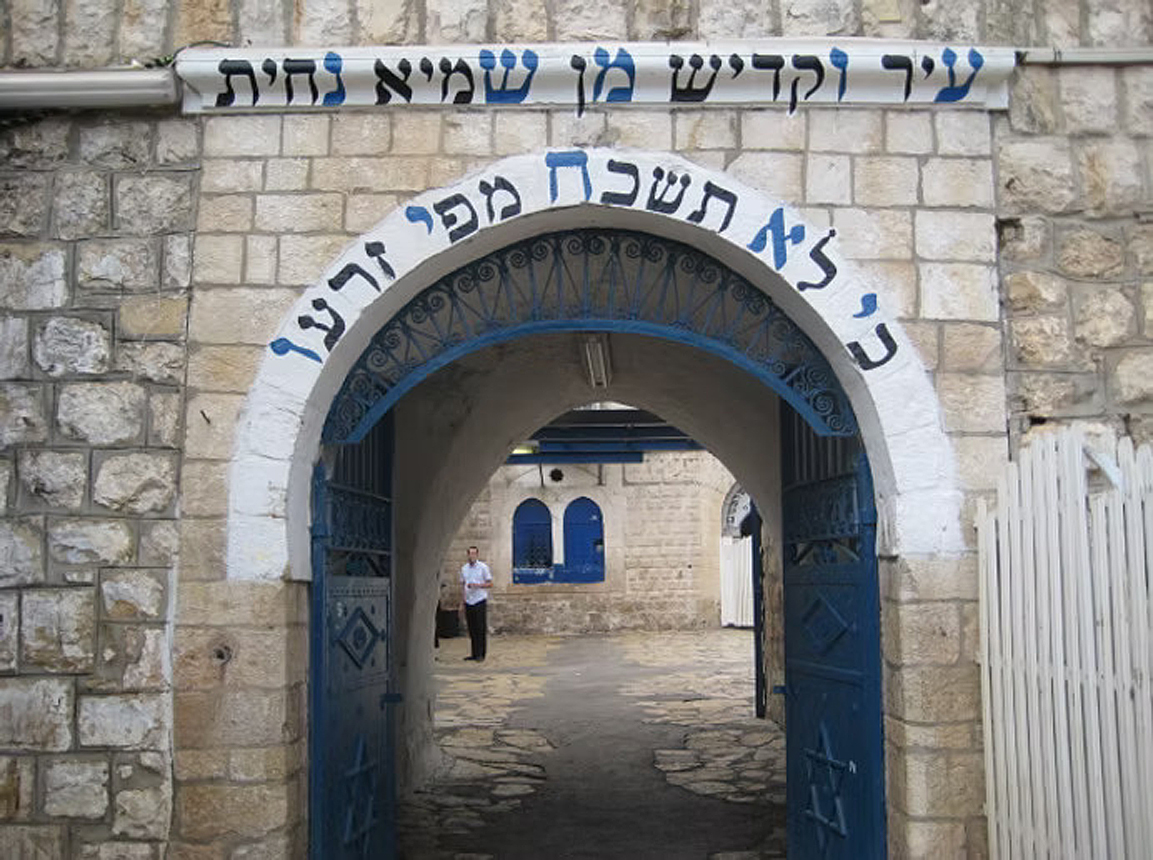
 Kever Rashbi-Rabbi Shimon bar Yochai-Meron Israel |
|
|
|
Laws and CustomsOmit Tachanun in the Afternoon
Count “Thirty-Three Days to the Omer” Tonight
The 49-day “Counting of the Omer” retraces our ancestors’ seven-week spiritual journey from the Exodus to Sinai. Each evening we recite a special blessing and count the days and weeks that have passed since the Omer; the 50th day is Shavuot, the festival celebrating the Giving of the Torah at Sinai.
Tonight’s Sefirah: Hod sheb’Hod — “Humility in Humility” (also: “Splendor in Splendor“) The teachings of Kabbalah explain that there are seven “Divine Attributes” — Sefirot — that G-d assumes through which to relate to our existence: Chessed, Gevurah, Tifferet, Netzach, Hod, Yesod and Malchut (“Love”, “Strength”, “Beauty”, “Victory”, “Splendor”, “Foundation” and “Sovereignty”). In the human being, created in the “image of G-d,” the seven sefirot are mirrored in the seven “emotional attributes” of the human soul: Kindness, Restraint, Harmony, Ambition, Humility, Connection and Receptiveness. Each of the seven attributes contain elements of all seven–i.e., “Kindness in Kindness”, “Restraint in Kindness”, “Harmony in Kindness”, etc.–making for a total of forty-nine traits. The 49-day Omer Count is thus a 49-step process of self-refinement, with each day devoted to the “rectification” and perfection of one the forty-nine “sefirot.”
Today in Jewish HistoryJewish HistoryRoman Garrison Defeated (66)Following the theft of silver from the Holy Temple in Jerusalem on the 17th of Iyar of the year 3826 from Creation (66 CE), the Jewish defense force attacked and defeated the Roman garrison stationed in Jerusalem.
IDF Created (1948)The Israel Defense Forces (IDF) was created on Lag BaOmer of 1948. The IDF comprises the Israeli army, Israeli air force and Israeli navy. It was formed to defend the existence, territorial integrity and sovereignty of the state of Israel and combat all forms of terrorism which threaten the daily lives of its inhabitants. |
|

What Is Lag B’Omer?by Rabbi Shraga Simmons https://aish.com/what-is-lag-baomer/ Lag B’Omer marks the date of Rabbi Shimon Bar Yochai’s death. So why is it such a celebration?
Rabbi Shimon in the CaveRabbi Shimon was a great sage who lived during the Roman conquest of Jerusalem 2,000 years ago. He was one of Rabbi Akiva’s five students who – despite terrible persecutions – ensured that the Torah would not be forgotten.
The Talmud (Shabbat 33b) describes a seminal event in the life of Rabbi Shimon:
When the Romans outlawed the study of Torah, Rabbi Shimon spoke out against them. The Romans thus pronounced a death sentence against Rabbi Shimon, who was forced to go into hiding.
Rabbi Shimon and his son Elazar fled to a cave in the northern region of Israel. They had no means of subsistence, but a miracle occurred and a carob tree sprouted in the cave, along with a stream of water.
Rabbi Shimon and his son had no change of clothes. In order to preserve their clothes from wearing out, they each dug a deep hole, removed their clothes and buried themselves neck-deep in the sand. (Out of modesty, they wanted to be covered.) They would spend the entire day immersed in Torah study. When the time for prayer arrived, they would put on their clothes, pray – and then return to the sand.
Rabbi Shimon and his son remained in the cave for 12 years, involved in nothing but the study of Torah. One day, Elijah the prophet came to the cave and announced that the Caesar had died, and the decree against Rabbi Shimon was lifted.
Rabbi Shimon and his son ventured out of the cave. They saw some farmers working in the field. Rabbi Shimon was shocked that his fellow Jews were not continuously occupied in Torah study. “How could anyone forsake eternal life by indulging in mundane, worldly pursuits?” he said. Rabbi Shimon then cast his gaze upon the farmers – and they were immediately vaporized, due to the power of Rabbi Shimon’s spiritual stature.
At that point, a voice from heaven proclaimed: “My world is not to be destroyed! Return to your cave!”
Rabbi Shimon and his son returned to the cave, in order to learn better how to control their spiritual powers. At the end of one year, a voice from heaven announced: “Emerge from your cave!”
Rabbi Shimon and his son emerged, and again encountered people involved in mundane, worldly pursuits. It was Friday afternoon, and they saw a man running with two bundles of myrtle blossoms. “Where are you going with these flowers?” they asked him. “They are in honor of Shabbat,” said the man. “But why do you have two bundles?” they asked. “One is for ‘zachor,’ and one is for ‘shamor,’ ” he said, referring to the two aspects of Shabbat observance mentioned in the Ten Commandments.
At which point Rabbi Shimon turned to his son and said, “Now I see the power of a Jew and his mitzvot” – Shabbat is a day within the physical world which bridges the gap to the transcendent dimension. On Shabbat, even the most physical pursuits – whether a delicious meal or an afternoon nap – carries with it a special degree of holiness.
RABBI SHIMON REVEALS THE ZOHARRabbi Shimon went on to become the greatest Torah teacher of his generation. When he reached the final day of his life, he called together his students and told them to pay close attention.
The Zohar (3:291b) describes the scene:
Rabbi Shimon spent the entire day in a prophetic stream of consciousness, revealing the deepest mystical secrets of Torah. He told his students: “Until now, I have held the secrets close to my heart. But now, before I die, I wish to reveal all.”
Rabbi Abba, a student assigned with the job of transcribing Rabbi Shimon’s words, reports: “I couldn’t even lift my head due to the intense light emanating from Rabbi Shimon. The entire day the house was filled with fire, and nobody could get close due to the wall of fire and light. At the end of the day, the fire finally subsided, and I was able to look at the face of Rabbi Shimon: He was dead, wrapped in his Tallis, lying on his right side – and smiling.”
Why was Rabbi Shimon bathed in light and fire? Because Torah is compared to fire – for example, “Aish HaTorah”. Fire is that material which converts physical matter into energy. So too, Torah shows us how to transform the material world into a transcendent energy. In fact Rabbi Shimon’s Kabbalistic work, “The Zohar,” literally means “shining light.”
How is Lag BaOmer Celebrated in Israel?To celebrate Lag B’Omer, Jews from around Israel light bonfires, to commemorate the great fire that surrounded Rabbi Shimon. For weeks before, Israeli children scavenge wood to arrange as impressive sculptures – often 20 and 30 feet high. Great public celebrations are held and the wood towers are burned on Lag B’Omer.
But if Lag B’Omer marks the date of Rabbi Shimon’s death, why is it such a celebration?
The reason is that Rabbi Shimon had been convicted of a capital crime by the Romans. By all rights, he should have died well before his time. But through tremendous self-sacrifice (hiding in the cave) and a series of miracles (the carob tree and the stream), Rabbi Shimon was able to live out a full life. The climax of this great life was the revelation of Torah’s greatest inner secrets. All this is cause for celebration.
Lag B’Omer is a day of great pilgrimage to the tomb of Rabbi Shimon in the Galilee town of Meiron. In one day, an estimated 250,000 Jews visit Meiron – dancing, praying, and celebrating the wonderful spiritual gifts that Rabbi Shimon bequeathed to us. Some people camp out for weeks beforehand in anticipation.
On Lag B’Omer, the entire town is filled with torches and bonfires – in the streets and on the rooftops. Planes flying overhead are perplexed, and satellite maps of Israel take on a different glow. Symbolically, they illuminate the paths of those who seek to understand the deeper truths of Torah, as revealed by Rabbi Shimon Bar Yochai.
|
|

The Light of Lag B’OmerThe light of the fires on Lag B’Omer is the light of the Torah, and the light of Hashem. This light is in our souls, and it’s what is truly burning inside.Moshe Neveloff | Posted on 23May2024 | https://breslev.com/1074139/
 The Light of Lag B’Omer by Moshe Neveloff
This week we celebrate the holiday of Lag B’Omer, which marks the celebration of the yahrzeit (date of passing) of Rebbe Shimon Bar Yochai, one of the greatest Tzaddikim and Sages from the time period of the Mishna. It also marks the end of the mourning period for the thousands of students of Rebbe Akiva who passed away in a plague during Sefirat Ha’Omer (counting the omer) according to one custom. Why do we celebrate the day Rebbe Shimon passed away as a holiday? Why do thousands upon thousands of Jews travel to Meron in Northern Israel to pray by his grave site and celebrate? Why do Jews all over the world light bonfires?
In a special and interesting way, Rebbe Nachman opens his main book of teachings, Likutei Moharan, with a teaching about Rebbe Shimon Bar Yochai, hinting at the special connection which exists between the souls of these two tzaddikim and the teachings which they revealed. Rebbe Nachman explains that Rebbe Shimon Bar Yochai promised that the Torah would not be forgotten, in his merit and in the merit of the Zohar which he revealed.
This is alluded to in a story in the Talmud, Tractate Shabbos. When the Sages gathered together in the town of Yavne, the only place in the land of Israel where the Romans still permitted Jews to learn Torah in public, they declared in their discussion that in the future the Torah will be forgotten from the Jewish people. They saw with their spiritual vision the length of the exile which had begun at that time and all of the sorrows which the Jewish people would suffer during the long years of exile. Rebbe Shimon Bar Yochai, who was present at the gathering, replied to the other Sages that G-d forbid, the Torah will be forgotten, as it says in the book of Devarim (Deuteronomy), “For it shall not be forgotten from the mouth of its offspring…” (Chapter 31, Verse 21). Rebbe Shimon supported his words that the Torah would not be forgotten with this verse specifically, because the final letters of each word in the verse spell the name Yochai in Hebrew, who was the father of Rebbe Shimon. Through the offspring of Rebbe Yochai, Rebbe Shimon, and his work, the Zohar, the Torah would not be forgotten.
Rebbe Nachman explains that it says in the Holy Zohar, authored by Rebbe Shimon Bar Yochai, that through his book the Jewish people will leave the exile. The light of the Holy Zohar will keep the Jewish people connected to the Torah during the long exile. For most of his life, except for a small group of students, nobody knew that Rebbe Shimon was learning the secrets of the Torah. On the day that Rebbe Shimon passed away, Lag B’Omer, he revealed to his students hidden secrets of the Torah and the Zohar. The whole room became filled with light, and this is how he passed away.
However, we need to ask ourselves a question – how are the secrets of the Torah connected to me on my level? What do they have to do with me? Many of us have trouble understanding these deep teachings.
A tzaddik like Rebbe Shimon has tremendous power on the day of his passing to reach even higher spiritual heights and sweeten any harsh decrees which might be upon the Jewish people in general, and specific Jews who pray in his merit in particular. The Sages said that a tzaddik is even more alive and present spiritually in the world after he passes away. Furthermore, several Chassidic masters teach that the power of atonement of Yom Kippur also happens for the Jewish people on Lag B’Omer, but in a more hidden way. Rebbe Shimon also reveals the secrets of the Torah to each person on their level. He reveals to them how much Hashem loves them and wants each and every Jew to be close to Him. He reveals that this is truly the thing which we all want most in the world, a life of revealing our connection with Hashem in our own special way. He shows us what our special path in this world is, and his light gives us the strength to keep walking on that path.
The special attribute of the day of Lag B’Omer is hod she’b’hod, glory of glory, and it is the week of Aharon the Cohen. Each week of the Sefirat HaOmer is connected to the special attribute of one of the seven shepherds of the Jewish people, Avraham, Yitzchak, Yaakov, Moshe, Aharon, Yosef and David. Rebbe Shimon also possessed the special attribute of Aharon, and he is able to shine the light of love into every person’s heart, especially on the day of his passing, just as Aharon brought love and peace between people in his time.
From my personal experience, almost every time I have traveled to Meron for Lag B’Omer or to Uman for Rosh Hashanah, at some point along the way I think to myself, “what I am doing?” I don’t want to go through dealing with the long hours of travel, the masses of people, the weather conditions, the lack of sleep, etc. But when I return, I understand exactly why I went. Inside, I feel renewed with the light of faith which these great Tzaddikim shine to each person who comes to them to pray and seek their guidance.
The light of the fires on Lag B’Omer is the light of the Torah, and the light of Hashem. It represents our true will to serve Hashem and return to Hashem. This light is in our souls, and it’s what is truly burning inside. Lag B’Omer has the power to show each person that this is who we truly are – burning with love and good desires to come closer to Hashem and live a life of helping others. Rebbe Nachman said, “My fire will burn until the coming of the Messiah.” He is continuing the path of Rebbe Shimon, revealing the fire of the Torah, the secrets of the Torah, in a way that each and every Jew can find their path to return to Hashem. These tzaddikim light the fire inside of us which has always been there – it just became extinguished at some point in our lives, like a secret which becomes revealed. Through their light we are able to begin to see our own light. Happy Lag B’Omer!
(Inspired by a short class on Lag B’Omer given by Ohad Tennenbaum, a teacher at Shackuf, the workshop I used to learn at; and a class by Rav Shlomo Katz).
***
Republished with permission from breslov.blog.
|
|

The History of Lag BaOmerA rich overview of the many customs that surround this special dayBy Boruch Altein https://www.chabad.org/library/article_cdo/aid/2585017/jewish/The-History-of-Lag-BaOmer.htm
Lag BaOmer is a festive day on the Jewish calendar, celebrated for a twofold reason.
The Talmud1 describes how, during the period of Sefirat HaOmer (the days between Passover and Shavuot), a plague was visited on Rabbi Akiva’s 24,000 students because they did not behave with proper respect for one another. To commemorate the tragedy, certain mourning customs are observed during this time.2 On the thirty-third day of the Omer count, however, the students stopped dying. (Lamed-gimmel, pronounced lag, is the Hebrew number 33.) The mourning customs are suspended, and we celebrate the day as a holiday.3
Lag BaOmer is also the yahrtzeit (anniversary of passing), several decades later, of the great sage and mystic Rabbi Shimon bar Yochai, best known as the principal author of the Zohar, the fundamental text of Jewish mysticism. The Zohar4 relates that on the day of his passing, Rabbi Shimon revealed new and profound mystical ideas to his disciples, and commanded them that rather than mourn for him, they should rejoice on this day, just as he rejoiced in his soul’s imminent reunion with G‑d.
All over the world, Lag BaOmer is marked with festive outings and picnics, where children play with toy bows and arrows. In Israel, tens of thousands gather in the small Upper Galilee village of Meron to celebrate at Rabbi Shimon’s gravesite. The night is lit up by bonfires of all sizes; the singing and dancing is a sight to behold.
When did these customs start? What is their significance, and how have they developed throughout the centuries? Let’s take a look at the sources of these unique traditions.
The Pilgrimage to MeronThe Zohar and other sources mention that some of Rabbi Shimon’s disciples would routinely visit his grave to pray and connect with their teacher.5 Among the prominent personalities who visited his grave were the Kabbalist Rabbi Moshe Cordovero,6 and Rabbi Yosef Caro, author of the Shulchan Aruch, who once spent the holiday of Sukkot in Meron with his family and disciples. There was a drought at the time, and Rabbi Yosef Caro prayed intensely for rain, culminating in the hoshaanot (the ritual of circling with the Four Species). His prayers were answered, and it rained.7
The first documented account of the custom of visiting Meron on Lag BaOmer is found in a fascinating letter by Rabbi Ovadiah of Bertinoro (15th–16th centuries), leader of the Jewish community in Israel, famous for his commentary on the Mishnah. He describes the day succinctly: “On the 18th day of the month of Iyar [the day of Lag BaOmer], the anniversary of [Rabbi Shimon’s] passing, Jews from all the surrounding areas gather in Meron, where they light large fires and celebrate . . . Many barren couples conceive, and many sick are healed, in the merit of the charity they give on this day to the upkeep of the gravesite.”8
Rabbi Chaim Vital, prime student of the master Kabbalist Arizal, writes in his Shaar ha-Kavanot:
(There is a well-known custom to let a male child’s hair grow long until his third birthday, when he receives his first haircut. Called an upsherin in Yiddish and chalakah by Sephardic Jews, the occasion is celebrated with a festive meal [see more here]. The purpose of the custom is to wait until he can realize that his sidelocks, peyot, were not cut completely, as mandated by the Torah.10 When the child’s birthday falls out in the days of Sefirat HaOmer, when cutting hair is forbidden, we wait until Lag BaOmer, when it is permitted. If the child is in Israel, it is customary to travel to Meron for the cutting ceremony [read more here]).
To illustrate the festive spirit that permeates this day, Rabbi Chaim Vital continues with this anecdote:
BonfiresAnother custom, practiced especially in Meron and throughout Israel, is to light bonfires on the night of Lag BaOmer. The earliest source for this custom is the abovementioned letter from Rabbi Ovadiah of Bertinoro.
The famed chassidic master Rabbi Tzvi Elimelech of Dinov, known by the title of his book as the Bnei Yissaschar, gives an interesting explanation for the custom. He writes11 that on the day of a tzaddik’s passing, all the holy work he has done culminates and is revealed in this world. On Lag BaOmer, the true power of Rabbi Shimon’s accomplishments as one of the foremost Mishniac sages and the author of the Kabbalah shone forth.
In fact, it is recorded in the Zohar12 that the overwhelming deluge of spiritual light had such a potent effect on the world that the sun did not set until Rabbi Shimon had finished conveying his wisdom and passed on, and that a spiritual fire surrounded his deathbed the entire day.13 We light fires to commemorate the spiritual revelation that occurred on this day.
Bows and ArrowsMany have a custom to give children toy bows and arrows to play with at Lag BaOmer picnics. The Bnei Yissachar cites an explanation from one of his teachers that, as a result of Rabbi Shimon’s great merits, no rainbow was seen during his lifetime. (According to Torah, the rainbow is a sign of G‑d’s displeasure.14) We play with bows to commemorate this miracle.
Another reason is based on the teaching of the Zohar that there will be an extremely bright, vivid rainbow before Moshiach comes. This is connected to Lag BaOmer because Rabbi Yisrael Baal Shem Tov, founder of the chassidic movement, taught that learning the mystical dimension of Torah espoused by Rabbi Shimon brings the messianic era closer.15 We play with a bow to remind us of the imminent arrival of Moshiach.
The Lubavitcher Rebbe, of righteous memory, provides additional explanations for the custom, which can be read here.
CarobsThe Talmud relates how Rabbi Shimon was once overheard criticizing the Roman government in Israel, and had to flee for his life together with his son Rabbi Elazar. The two took refuge in a cave, where they remained for 13 years, studying Torah. G‑d made a fresh spring emerge miraculously by the mouth of their cave, and a carob tree grew, whose fruits supplied them with food.16 Many have a custom to eat carob fruit on Lag BaOmer to commemorate this story.
Miraculous BlessingsMany blessings have been attributed to praying at Rabbi Shimon’s grave, particularly blessings related to healthy offspring. One of the most famous stories was witnessed and recorded by Rabbi Yeshayah Asher Ze’ev Margolis, author of a well-known and authoritative book on Lag BaOmer, Sefer Hillula de-Rashbi:
Lag BaOmer in ChabadChabad Chassidim of old looked forward to Lag BaOmer, when the rebbe would hold a large farbrengen in the countryside surrounding the town of Lubavitch, as described in Hayom Yom:
Beginning in the 1950s, the seventh Lubavitcher Rebbe, Rabbi Menachem Mendel Schneerson, encouraged Jewish children to join together in grand Lag BaOmer parades as a show of Jewish unity and pride. Held in front of the Lubavitch world headquarters in Brooklyn, New York, the parades attracted—and still attract—thousands of children from all walks of life.
In accordance with the Rebbe’s general instruction that any gathering of Jews should be connected with Judaism and Torah, the children would recite the 12 Pesukim, 12 Torah passages selected by the Rebbe as containing the most fundamental ideas in Judaism, before the parades began. The floats displayed Jewish themes, and the parades were followed by festivities for the entire family.
Often the Rebbe spoke at the parades, sometimes addressing current world events. A well-known example of this was the 1967 parade, when the Rebbe spoke about the crisis happening in the Middle East. He issued a call to increase in the fulfillment of the Torah as a medium for expanded divine blessings for the Jewish people, and predicted that a great miracle would shortly happen. He stood out as one of the few Jewish leaders to anticipate Israel’s victory in the Six-Day War.
In 1980 the Rebbe gave instructions that Lag BaOmer parades and children’s rallies should take place not only in New York, but across the world, especially in Israel. Thousands of children participated in the tens of rallies that took place that year, and until today Chabad organizes hundreds of Lag BaOmer parades around the world each year.
Perhaps the most important lesson the holiday has to offer is expressed in a letter the Rebbe wrote to all Jews in honor of Lag BaOmer 1974. When one examines Rabbi Shimon’s life, he writes, one sees that there were two focal points around which it revolved: Torah study and love of fellow Jews. Although not everyone can study Torah as an exclusive occupation, as Rabbi Shimon did, everyone can and should set aside times each day to devote solely to Torah study without any outside interference. This should be permeated with a sense of ahavat Yisrael—love of a fellow Jew—which will bring them to encourage others to follow suit.
By fulfilling this directive, may we merit to experience a time when there will be only light in the world, and G‑d’s presence will be visible and tangible to all mankind.
Footnotes 2. For more information about the mourning customs of Sefirat HaOmer, see here. 3. Tur & Shulchan Aruch, Orach Chaim 493. 4. Zohar 3:291a. 5. Zohar 1:4a; Kohelet Rabbah 10:10; Talmud, Sanhedrin 98a. 6. Sefer ha-Gerushin, 17–18. 7. Maggid Meisharim, Emor. 8. Taamei ha-Minhagim, p. 201. 9. Shaar ha-Kavanot, Pesach 12; Pri Etz Chayim, Gate 22, ch. 7. 11. Bnei Yissaschar, Iyar, discourse 3. 12. Zohar 3:291a. 13. Ibid. 3:296b. 14. Genesis 9:11–17. 15. Keter Shem Tov 1. 16. Talmud, Shabbat 33b, 17. Sefer Hillula de-Rashbi, p. 9. 18. Hayom Yom, 18 Iyar.
|
|
Breslev Customs for Lag B’OmerRead about the customs in Breslever communities of Yerushalayim, Williamsburg, Monsey, and Borough Park…Rabbi Dovid Sears | Posted on 22October2025 | https://breslev.com/265154/  Breslev Customs for Lag B’Omer Rabbi Dovid Sears
Rabbi Shmuel Horowitz writes lavishly about the simcha (happiness) and hitorerut (illumination) experienced by those who celebrated Lag B’Omer in Meron, particularly the Breslever Chassidim who participated in the “hillula de-RASHBI (anniversary of his passing).” He writes: “What can be said, what can be communicated? One should yearn, long, and exert himself all of his days with mesirut nefesh (devotion) to experience and share in this. In the inner part of the tomb, people weep and do teshuva, and their hearts are deeply aroused; even on Yom Kippur, no one ever heard of such a place of teshuva as this! On the outside [in the courtyard and surrounding areas], rejoicing, gladness, singing, music, and dancing prevail; even at the weddings of kings, no one ever beheld or heard of such ecstasy! Ashreinu mah tov chelkeinu (happy are we and how good is our portion), that we were privileged to witness all this!” (Rabbi Shmuel Horowitz, Yemei Shmuel, vol. I, chap. 56. For more extensive Breslev teachings and historical material on Lag B’Omer, see Mo’adei Yisrael: Lag B’Omer, Bnei Brak: Agudat Mayanot ha-Netzach 2003)
* * *
On the Shabbat before Lag B’Omer in the Breslever communities of Yerushalayim, Williamsburg, Monsey, and Borough Park, it is customary to sing “Bar Yochai” etc., before “Ki-gavna” on Friday night. This is a widespread custom today. (Heard from Rabbi Nachman Burshteyn and Rabbi Meir Wasilski)
* * *
In the Tzefat community they sing “Bar Yochai” and “Amar Rabbi Akiva” on every Friday night before “Ki-gavna.”
* * *
This is also the custom in Meron. (Heard from Rabbi Avraham Shimon Burshteyn) * * * Tachanun is omitted on both Erev Lag B’Omer and Lag B’Omer, as stated in Shulchan Aruch. However, it is not our custom to omit Tachanun for the entire week of “hod,” as in some Chassidic communities. (See Orach Chaim 493:2, with Mishnah Berurah)
* * *
In Likutei Halakhot, Rebbe Nosson mentions the minhag (custom) to give a child his first haircut on Lag B’Omer.
* * *
In addition to participating in the traditional festivities, many Breslever Chassidim recite Rebbe Nosson’s prayer in honor of Rabbi Shimon Bar Yochai, Likutei Tefillot II, 47.
* * *
It is also common practice to learn the Rebbe’s lesson “Lekhu Chazu” at the beginning of Likutei Moharan, which discusses Rabbi Shimon Bar Yochai and the Zohar. This lesson is usually delivered by one of the speakers at the Lag B’Omer seudah in the various Breslev communities.
* * *
The Rebbe states that shooting arrows on Lag B’Omer is a segula for having children. (Sefer ha-Middot, “Banim” I, 63)<
* * *
Members of the Tzefat community visit the grave of Rabbi Shimon in Meron on Lag B’Omer, together with the many thousands of Jews who come from far and wide in honor of the tzaddik and in order to pray for divine mercy at this auspicious time.
* * *
Reb Avraham Sternhartz used to spend either the Shabbat before or after Lag B’Omer in Meron. (Heard from Rabbi Avraham Shimon Burshteyn)
|
|

Tens of Thousands Visit Meron Shrine for Lag B’Omer Celebrations in Israelby JNS.org 14May2017 9:23 am https://www.algemeiner.com/2017/05/14/tens-of-thousands-visit-meron-shrine-for-lag-bomer-celebrations-in-israel/ 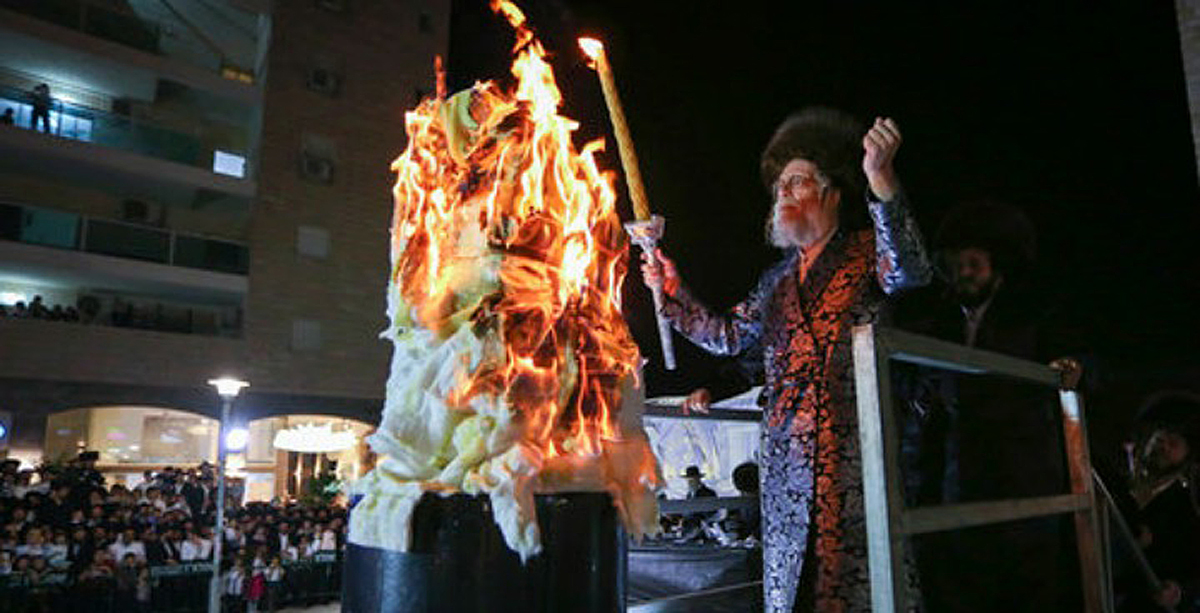 Ultra orthodox jews from the chassidic dynasty of Schatz Dershowitz seen near a big bonfire, during celebrations of the Jewish holiday of Lag Baomer in Beit Shemesh outside Jerusalem on May 13, 2017. Lag Baomer commemorates the death of Rabbi Shimon Bar Yochai, one of the most important sages in Jewish history 1800 years ago. The most well-known custom of Lag BaOmer is the lighting of bonfires throughout Israel and in Jewish communities worldwide. Photo by Yaakov Lederman/ Flash90 Haredi Jews watch the lighting of a bonfire in Beit Shemesh, near Jerusalem, for Lag B’Omer May 13, 2017. Photo: Yaakov Lederman/Flash90. JNS.org – Tens of thousands of Israelis traveled to the gravesite of famed sage Rabbi Shimon bar Yochai (“Rabbi Shimon”) at Mount Meron this weekend for the Lag B’Omer holiday.
The annual Lag B’Omer celebrations at Meron, in Israel’s northern Galilee, represent some of the largest public gatherings in the country, attracting mostly Israelis from the Jewish state’s haredi communities.
This year’s festivities commenced with the lighting of a major bonfire at 1:15 a.m. Sunday by Rebbe Nachum Dov Brayer, leader of the Boyan Hasidic dynasty. Israel Police Commissioner Roni Alsheikh, Religious Services Minister David Azoulay and Public Security Minister Gilad Erdan all attended the bonfire.
Lag B’Omer is the 33rd day of the seven-week Omer period between the Jewish holidays of Passover and Shavuot. Though deemed a relatively minor Jewish holiday, Lag B’Omer holds major spiritual significance in Judaism’s mystical Kabbalistic tradition.
According to Jewish tradition, Rabbi Shimon — a leading disciple of Rabbi Akiva — passed away on the date of Lag B’Omer in the 2nd century AD. Tradition also states Rabbi Shimon transmitted the Zohar, the foundational Kabbalistic text he authored, on Lag B’Omer. Bonfires are lit on the holiday to celebrate the spiritual light Rabbi Shimon brought into the world with the mystical text.
Also on Lag B’Omer, Jews cease to mourn the deaths of 24,000 of Rabbi Akiva’s students. A deadly plague caused by the students’ disrespect for each other stopped abruptly on the 18th day of the Hebrew month of Iyar, coinciding with Lag B’Omer, according to the Talmud. Only five students — including Rabbi Shimon — survived the plague.
|
|
Count on Rebbe Shimon!Why do hundreds of thousands of people frequent Rebbe Shimon Bar Yochai’s holy gravesite in Meron every Lag B’Omer? They have someone to count on…Rabbi Lazer Brody | Posted on 04May2023 | https://breslev.com/426857/
 Count on Rebbe Shimon! – Rabbi Lazer Brody
Rebbe Yehoshua ben Levi was one of the greatest miracle workers and righteous sages of the Talmud. But in a trying situation, he suggests that we count on Rebbe Shimon (tractate Berachot, 9a).
For centuries, Jews have done everything in their power to pray by Rebbe Shimon bar Yochai’s holy grave site in Meron on Lag B’Omer, his yahrtzeit, or day of departure from the physical world. Throughout the ages, people have seen phenomenal miracles after having come to Meron on Lag B’Omer, the thirty-third day of the Omer. What’s so special about it?
The Zohar in the beginning of the Idra Zuta tells that moments before Rebbe Shimon left this world he gathered his students and told them that this – the Eighteenth of Iyar and Lag B’Omer – should be a day of joy and celebration. The Arizal says, “On Lag B’Omer the Tanna Rashbi (acronym for Rebbe Shimon bar Yochai) stands at his holy resting place and blesses each and every person that comes to pray there and rejoice in his name on his holy yahrtzeit.”
A blessing from Rebbe Shimon, author of the holy Zohar who revealed the esoteric secrets of Torah, invokes miracles. Thousands of Jewish children are named “Shimon” in honor of Rashbi, since they were born as a result of their parents’ supplications in Meron. I’d like to share one such story with you, in which I was personally involved.
Tomer and Sari Berman (names changed to protect their privacy) were born into secular homes in Haifa. Tomer had been a sailor in the Israeli Merchant Marines and Sari was a former champion athlete. After having received emuna books and CDs, Tomer and Sari decided to pursue an observant Jewish lifestyle. They hoped that their spiritual turnaround would accord them with the merit of having children, for they had been married for six years already and were yet to be blessed with children.
As an athlete, Sari had suffered a type of hernia that is associated with tremendous strain on the inguinal area. Her reproductive apparatus was severely damaged and fertility specialists told her that she had a minuscule chance of ever having children. She and Tomer weren’t satisfied with the answer they received in the Israeli fertility clinic, so they used up every bit of their savings seeking the advice and treatment of specialists in Europe and America. Broken-hearted and empty-pocketed, they came back to Israel, a week before Lag B’Omer. They gave me a call and asked if I had any advice for them. I told them that they should take advantage of the Arizal’s promise, go to Meron on Lag B’Omer, and get the blessing of Rebbe Shimon bar Yochai. If possible, they should also do six hours of personal prayer there. They did.
Twelve months later, on the eleventh day of Iyar, little baby Berman was born. The day of the Brit Mila, the circumcision, came out on the 18th of Iyar, Lag B’Omer! Despite the difficulties involved, Tomer and Sari insisted on having his Brit (circumcision) in Meron. They did, and they named the baby Shimon.
Three years later, Shimon had his challakeh, his first haircut, in Meron.
Next year, G-d willing, Shimon Berman will have his bar mitzvah in Meron.
You can surely count on Rebbe Shimon.
|
|

New Ben & Jerry’s Limited-Edition Flavor for Lag B’Omer in IsraelBy Hana Levi Julian  Ben & Jerry’s new flavor for Lag B’Omer, ‘S’mores’
Israeli ice cream lovers, rejoice!
Ben & Jerry’s Israel has announced it will offer a brand-new flavor – in a limited edition – for the upcoming Lag B’Omer holiday.
The new flavor, “S’mores” will reprise the long-beloved sweet, created annually by countless children at summer campfires, using sweet crackers, chocolate bars and gooey, roasted marshmallows.
The name “s’mores” is an abbreviation of the phrase “some more.”
The Ben & Jerry’s version – only in Israel and only for the Lag B’Omer holiday, will feature ice cream that combines marshmallow with cookie crumbs, chocolate cookie crumbs and pieces of fudge.
The new flavor will be available in all the Israeli food chains, convenience stores and supermarkets where Ben & Jerry’s is sold.  Ben & Jerry’s new Lag B’Omer S’mores flavor
|
|
Rabbi Shimon Bar YochaiBy Nissan Mindel
Every year on Lag BaOmer (18 Iyar), we remember the great and holy Tanna (Mishnaic sage) Rabbi Shimon bar Yochai, who died on this day about eighteen centuries ago. To this day, pious Jews make an annual pilgrimage to Kefar Meron, in the Land of Israel, to pray at the tomb of this great and holy scholar.
A Student of Rabbi AkivaWhen Shimon was a young boy, he studied in the great academy of the scholars of Yavneh, founded by Rabbi Yochanan ben Zakkai, who died just about the time that Shimon was born. Shimon’s principal teacher was the famous Rabbi Akiva, who had his academy at Benei Berak. So attached did Shimon become to his master, Rabbi Akiva, that the latter called him “my son.”
During the cruel persecution by the Roman Emperor Hadrian, when the Talmudic Academies were shut down and the study of the Talmud was forbidden on penalty of death, Rabbi Akiva continued to teach the Talmud publicly, and his devoted pupil Shimon stayed at his side, until Rabbi Akiva was arrested. Even then, Shimon continued to visit his master in prison to receive instruction there. Only death finally separated them, for Rabbi Akiva was condemned to die a martyr’s death for Kiddush Hashem (the sanctification of G‑d’s name).
Becoming a Rabbi Under Roman RuleThose were very difficult times for the Jewish people in the Land of Israel under the brutal persecution of the Roman Emperor Hadrian. It was particularly difficult for the sages to study the Talmud and to conduct schools. On penalty of death, it was also forbidden to ordain students of the Talmud. Both the ordaining Sage and the ordained scholar were put to death if caught. The entire Jewish religious life was in danger, until the great Rabbi Yehudah ben Baba publicly ordained five famous scholars, defying Hadrian’s cruel decree. Rabbi Shimon was one of these five scholars. (Rabbi Meir was another one.) The Roman authorities were soon after these dauntless Jewish champions. The ordained scholars escaped, but Rabbi Yehudah ben Baba was caught and put to death.
Defying the RomansFinally, the cruel Hadrian died in great pain, and his decrees were no longer enforced with the same brutality as before. Then the leading sages of that time gathered to consider ways and means of restoring Jewish religious life. Among the leading sages gathered at Usha, we find Rabbi Shimon again. For reasons of safety, the sages moved to Yavneh, where they sat in conference in a vineyard. The leading sages were Rabbi Yehudah, Rabbi Yosei the Galilite, and Rabbi Shimon bar Yochai. Discussing what attitude to take towards the Roman government, Rabbi Yehudah suggested a friendly one, Rabbi Yose expressed no opinion, while Rabbi Shimon spoke very bitterly of the Roman tyrants, and advocated every possible defiance. For Rabbi Shimon could never forget the terrible sight of his beloved master and teacher, Rabbi Akiva, being tortured to death by the Roman executioners. The sages were not aware that their conversation was overheard by a certain young man, Judah ben Gerim. At one time a disciple of Rabbi Shimon, Judah ben Gerim later turned spy for the Roman authorities. This treacherous man reported the conversation of the sages to the Roman authorities. At once they decreed honor and rank for Rabbi Yehudah for speaking favorably of them, exile for Rabbi Yosei for failing to do so, and death for Rabbi Shimon, who dared to challenge them.
Life in HidingRabbi Shimon fled for his life together with his son Rabbi Elazar. For some time they stayed in hiding in the Bet Hamedrash (academy), where Rabbi Shimon’s wife brought them bread and water daily. When the search was intensified, they decided to seek a better hiding place. Without telling anyone of their whereabouts, they hid in a cave. G‑d caused a carob tree to spring up at the entrance to the cave, as well as a spring of fresh water. For twelve years, Rabbi Shimon bar Yochai and his son Elazar dwelt in the cave, sustaining themselves on carobs and water. During the time, they studied and prayed until they became the holiest sages of their day.
Return to Worldly MattersAt the end of twelve years, the Prophet Elijah brought them the good tidings of a change in the government and a reprieve. Father and son now left the cave. Passing a field where they saw Jewish farmers toiling on the land, they said, “Imagine people giving up the sacred study of the Torah for worldly matters!”
No sooner did they utter these words, than all the produce of the field went up in smoke. Then they heard a heavenly voice saying, “Have you come out to destroy My world? Go back to your cave!” They returned to the cave for another twelve months, and left it again, only after they heard the same heavenly voice calling them to leave.
This time, they came out with a different outlook on life. Seeing a Jew carrying two bunches of myrtle, rushing home on Friday afternoon, they asked him what he was going to do with the myrtle.
“It is to adorn my house in honor of the Shabbat,” the man replied.
“Would not one bunch of myrtle be sufficient to fill your house with fragrance?” they asked.
The stranger replied, “I am taking two bunches, one for ‘Remember the Shabbat day’ and the other for ‘Keep the Shabbat Day holy.’”
Said Rabbi Shimon to his son, “See how precious the precepts are to our brethren!”
Satisfied that despite all the decrees and persecutions of the cruel Roman rulers, the Jews still clung to the commandments and especially Shabbat observance, Rabbi Shimon and his son felt greatly encouraged.
Proceeding on their way, they met Rabbi Pinchas ben Yair, another famous scholar about whom there are so many wondrous tales in the Talmud. Rabbi Pinchas ben Yair was Rabbi Shimon’s father-in-law, and he came out to meet his in-laws. Seeing the terrible effects of the prolonged cave life upon the health of his son-in-law, Rabbi Pinchas ben Yair burst into tears, but Rabbi Shimon consoled him saying that he could never have attained such a high degree of scholarship and divine wisdom, had he not spent so many years in the cave.
Teaching in TekoaRabbi Shimon settled in the town of Tekoa, where he founded a great academy. The greatest scholars of the time gathered there to receive instruction from Rabbi Shimon. Among them was Rabbi Yehudah, the son of Rabbi Shimon ben Gamliel, the Nassi, later the compiler of the Mishnah.
One day Rabbi Shimon met Judah ben Gerim, the treacherous spy who had caused him so much trouble. Rabbi Shimon exclaimed, “Is this man still alive?” and soon afterward Judah ben Gerim died.
Once again religious persecution increased. The Romans prohibited Shabbat observance and other important Jewish laws.
The Sages decided to send a delegation to Rome, and chose Rabbi Shimon bar Yochai to head the delegation.
When they came to Rome, they heard that the daughter of the Roman emperor had lost her mind and that no one could cure her. Rabbi Shimon bar Yochai proceeded to the palace and asked for permission to treat the patient. After a few days’ treatment the princess became well. In gratitude, the emperor told Rabbi Shimon that he could choose the most precious thing in his treasury. Rabbi Shimon found there the original decrees of persecution, and claimed them as his reward. Thus he succeeded in bringing great salvation to his people.
Teacher of IsraelRabbi Shimon bar Yochai was one of the greatest teachers of Jewish Law and ethics. His many sayings and laws in the Talmud reflect his holiness of character and devotion to the Torah. Once he said, “If I were present at the giving of the Torah on Mount Sinai, I would have demanded two mouths: one for continuous study of the words of the Torah, and the other for eating.” But then he admitted that this would not be very wise, since even now when man has but one mouth, he says so many wrong things. How much more so if he had two!
Even though he lived the life of a recluse for many years, Rabbi Shimon knew the importance of good human relationships. Said he, “Man should rather jump into a fiery furnace than offend another in public.” “To deceive anyone by words is worse than cheating him out of money.” “He who lets arrogance get the better of him is like the heathen worshipping idols.” In the Ethics of Our Fathers, we find his saying, “There are three crowns: the crown of the Torah, and crown of priesthood, and the crown of royalty; but the crown of a good name excels above them all.”
Rabbi Shimon bar Yochai is the author of the sacred Zohar (“Brilliance”), containing mystic interpretations of the Torah, and chief source of the Kabbalah. For many generations the teachings of the holy Zohar were studied by a few select scholars, until the great scholar Rabbi Moses ben Shem Tov de Leon published the Zohar about seven hundred years ago.
Rabbi Shimon is also the author of Sifri and “Mechilta of Rabbi Shimon bar Yochai.”
Rabbi Shimon bar Yochai died in Meron, a village near Safed, in the Land of Israel. As we mentioned before, many Jews make an annual pilgrimage to his grave on the eighteenth of Iyar (Lag BaOmer), the day he died, where they light candles and pray at his grave.
|
|
The Wisdom of Rabbi Shimon Bar YochaiBy Nissan Mindel
Lag B’Omer is around the corner, and two great names immediately come to our mind: Rabbi Akiba and Rabbi Simeon Ben Yohai.
Rabbi Simeon Ben Yohai was a disciple of Rabbi Akiba. The Romans had put a price on his head, so he hid in a cave, together with his son Rabbi Elazar for thirteen years. When they came out of hiding they were the greatest teachers of their time. Rabbi Simeon died on the day of Lag B’Omer.
Many are the wise sayings and teachings of Rabbi Simeon, which are to be found in all sections of the Talmud. Here we want to mention some of them, so that we can learn a little more about this great Sage.
Rabbi Simeon ben Yohai lived in a difficult time, when his beloved land and people were under the rule of the cruel Romans. But he knew that G‑d was always with His people. Said he:
“Great is G‑d‘s love for Israel, for He revealed Himself to them in a land of uncleanliness and idol worship (Egypt) in order to free them from there.”
Again, Rabbi Simeon said: “See how beloved Israel is to the Holy One, blessed be He, for wherever they went into exile, the Divine Presence (Shechinah) went with them: they were exiled to Egypt, and the Shechinah went with them; they were exiled to Babylon, and again the Shechinah went with them. And when Israel will be redeemed in the future, the Shechinah will be redeemed with them, as it is written, ‘And G‑d, thy G‑d, will return (with) thy exile.’ ”
Rabbi Simeon ben Yohai was a great lover of the Holy Land. Said he:
“No one should leave the Holy Land as long as there is something to eat there at any price. Elimelech, Machlon and Kilyon (mentioned in the Book of Ruth) were leaders of their generation. “When they left the Holy Land during the famine, they were punished and died in a strange land.”
On another occasion, Rabbi Simeon said: “G‑d gave Israel three wonderful presents, but each one was earned through pain and suffering: The Torah, the Holy Land, and the World to Come.”
Rabbi Simeon’s love for the Torah knew no bounds. As he himself never wasted any time, but devoted every minute to the study of the Torah, so he urged others to do likewise, even when people have very little time to spare. He gave the following example:
“There were two brothers. One was saving every penny until, in time, he had quite a large fortune. The other thought, What’s the use of saving pennies? So he spent everything, and remained always poor.
“So it is with learning,” said Rabbi Simeon. “If one learns two or three things during the day, and two or three things at night, two or three chapters during the Sabbath, and the same during Rosh Chodesh, then in time he will be rich with knowledge. But the one who says, How much can I learn, I have so little time? and wastes those precious minutes, will always be poor in knowledge.”
Rabbi Simeon taught that the welfare of the people depended upon their observance of the Torah, for he said:
“The bread-loaf and the rod came down together from Heaven. Said G‑d, If you keep the Torah, you will have bread to eat if not, you shall get the rod.”
One of Rabbi Simeon’s students once went abroad, and returned with great riches. The other students were filled with envy and also wanted to go abroad to make their fortunes. This made Rabbi Simeon sad, and he told them that they could have the choice of gold or the Torah. In fact, he took them to a valley, and prayed to G‑d to fill it with gold. The next moment the valley was filled with gold. Rabbi Simeon then said, “Whoever wants it, may have as much as he likes; but know that whoever takes this gold, will lose his share in the World to Come.” No one took any of it.
Rabbi Simeon spoke very lovingly of the holy Shabbos. He said that it was a gift which G‑d gave to the Jews alone, and that the Jews and the Shabbos are a fitting pair. Here is what Rabbi Simeon said of the Sabbath:
“The Sabbath said to G‑d, Master of the World! Each day of the week has a campanion (Sunday has Monday, Tuesday-Wednesday, etc.), except for me, for I am the odd day of the week! Replied G‑d, The People of Israel shall be your companion!”
Rabbi Simeon also had this to say about the Sabbath:
“If the people of Israel would observe but two Sabbaths properly, G‑d would redeem them immediately!”
Rabbi Simeon taught his people to be honest and truthful, and with good manners. Said be:
“To cheat one by words is even worse than to cheat him out of money.”
“One who enters his house suddenly, and especially one who enters somebody else’s house without knocking, is disliked by G‑d.
Rabbi Simeon urged the good people not to lose all the good they have done by turning away from G‑d in the end. The wicked people he urged to return to G‑d and in this way wipe their record clean:
“A man, even if he was completely righteous all his life, may lose all his benefits, if he turns away from G‑d in the end. But he who was wicked all his life, yet returns to G‑d in the end-his wicked past will be forgotten.” (This does not include, of course, one who thinks that he can go on sinning, hoping to turn over a new leaf some day, and get away with it.)
Because of Israel, G‑d blesses the whole world. Said Rabbi Simeon ben Yohai: “When the people of Israel are worthy, the rain comes down on the fields and trees and seeds, and the world is blessed. But if the people of Israel are not worthy, the rain falls into the oceans and rivers (bringing nothing but floods).”
Once Rabbi Simeon was asked, “Why did the manna come down from heaven every day? Could not G‑d rain down enough manna in one day to last them a whole year?”
To which Rabbi Simeon replied: “A king had a beloved son. The king gave his son an allowance once a year, and only saw him one day in the year, when he came for his allowance. So the king began to give his son his allowance in small instalments every day, and the son came to see his -father daily. So it was also with the children of Israel. Every day the Jews would lift their eyes to G‑d praying for food, so that His children would not die in the desert. If they would receive in one day enough food for a whole year, they would pray to G‑d only once a year.”
Thus Rabbi Simeon ben Yohai taught us the importance of our daily prayers, not because G‑d has to be reminded about us, but because praying to G‑d and keeping G‑d in our hearts and minds every day, constantly, is good for us and will make us better people.
|
|
Rashbi’s PassingLag B’omer is the anniversary of Rabbi Shimon bar Yochai’s exit from the physical world. The Zohar in Idra Zuta gives a moving account of what happened…Rabbi Moshe Miller | Posted on 23May2024 | https://breslev.com/352596/ 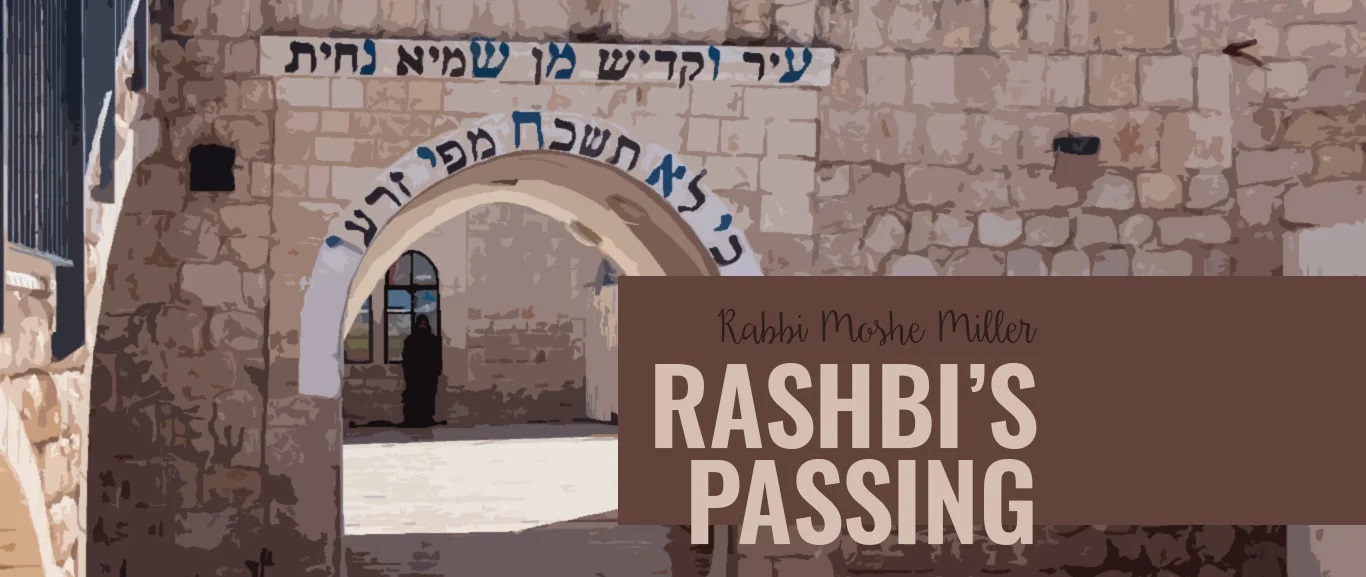 Rashbi’s Passing Translated by Rabbi Moshe Miller from the Idra Zuta, Zohar III, 287b-296b
We have learned: On the day that Rabbi Shimon [bar Yochai] was to depart the world he began arranging his teachings.
Tzadikim of the stature of Rabbi Shimon know when they have fulfilled their tasks in this world and when they are to pass on to the World of Truth. They therefore begin preparing themselves for the transition.
The Disciples [of Rebbe Shimon found out that he was making his final arrangements, and they] gathered together at the house of Rebbe Shimon. Before him were Rabbi Elazar his son, Rabbi Abba and the other disciples, so that the house was filled. Then fire surrounded the house, so that everyone fled outside…
When Rabbi Shimon looked up and saw that the house was full, he wept and said, “On another occasion, when I was deathly ill (as mentioned in the Addenda to Zohar Devarim), Rabbi Pinchas ben Yair was with me. While I was choosing my place [in the Garden of Eden] they granted me [extra years] until now. When I returned [to the living], a fire surrounded me and it never ceased, so that no person could come in to me without permission.
The fire surrounding him was a sign that the Shechina was constantly revealed upon him. Even the greatest of Rabbi Shimon’s students, such as Rabbi Chiya, required permission to enter (see Zohar II 14a).
Now I see that it has ceased, and so the house has filled up [with visitors who entered without my permission].
Commentaries explain that perhaps there were some there who were not worthy of hearing the mysteries that Rabbi Shimon planned to reveal, and for this reason the Shechina had left him (Kocho d’Rashbi, Ma’aracha 4).
While they were sitting Rabbi Shimon opened his eyes [in the sense of spiritual gazing into the higher worlds] and saw what he saw.
He experienced the revelation of the Shechina (Sha’arei HaIdra).
Then fire surrounded the house, so that everyone fled outside leaving only Rabbi Elazar and Rabbi Abba [who were worthy of receiving the Shechina]. The remainder of the disciples sat outside. Rebbe Shimon said to Rabbi Elazar his son, “Go outside and see if Rabbi Yitzchak is here. I made a promise to him [that he would live until the day of my passing and that I would take him into the Garden of Eden (see Zohar I, 118a)]. Tell him to put his affairs in order and then come and sit with me. Happy is his lot!” The holy matters that I did not reveal until now, I wish to reveal in the presence of the Shechina…
Rebbe Shimon arose [in deference to the Shechina and the souls of saintly tzadikim that had descended to be with him as he revealed the secrets of the Torah]. He then sat again, smiling and happy, and he asked, “Where are the Disciples?” Rabbi Elazar arose and brought them in. They sat down before Rebbe Shimon.
Rebbe Shimon raised his hands in prayer and made his supplications with great joy. Then he said, “Those who were in the Idra [Rabba] are invited [to stay, but not the rest of the visitors, lest they put themselves in danger]. They all went out and only Rabbi Elazar his son, Rabbi Abba, Rabbi Yehuda, Rabbi Yose and Rabbi Chiya remained. Meanwhile, Rabbi Yitzchak arrived, and Rabbi Shimon said to him, “How fortunate is your lot. How much joy should be added to you on this day!” Rabbi Abba was sitting behind Rebbe Shimon’s shoulders and Rabbi Elazar before Rebbe Shimon.<
Rebbe Shimon said, “Now is an auspicious time [to reveal the secrets of the Torah]. I wish to enter the World to Come without shame. For the holy matters that I did not reveal until now, I wish to reveal in the presence of the Shechina, so that no one will say that I left the world without fulfilling my task and that I concealed [these secrets] in my heart until now so that they would come with me to the World to Come. I will present them to you; Rabbi Abba shall write, and Rabbi Elazar my son will review them, and the remaining Disciples must whisper them in their hearts.” The dead do not praise G-d…
Rabbi Abba rose from behind Rabbi Shimon’s shoulders [and sat before Rebbe Shimon]. Rabbi Elazar continued sitting before Rebbe Shimon. Rebbe Shimon said, “Arise, my son, for another [a tzadik from the upper worlds] will sit in that place.” Rabbi Elazar arose [and sat down elsewhere].
Rebbe Shimon wrapped himself [in his talit]. He sat down and said: “‘The dead do not praise G-d, nor do those who go down into Silence [the eternal silence of the grave for the absolutely wicked] (Psalms 115:17).’ ‘The dead do not praise G-d…’ – this surely means those who are called ‘dead’ [even when they are alive], for G-d is called ‘[eternally] living’, and He dwells among those who are also called ‘live’ [the righteous] and not among those who are called ‘dead’ [even during their lifetimes, for they do not cleave to G-d, the Source of Life]. The end of the verse states, ‘…nor do those who go down into Silence’ – those who descend to Silence will remain there. [I.e., only those who descend to Silence permanently will not praise G-d, whereas those who experience a temporary spiritual anguish [Gehinom] after death do return to utter G-d’s praises]. But those who are called alive are different; the Holy One, blessed be He, desires their honor.”
***
(Reprinted with kind permission of www.kabbalaonline.org)
(Rabbi Moshe Miller, a guest teacher at Ascent when he lived in Israel, was born in South Africa and received his yeshiva education in Israel and America. He is a prolific author and translator, with some twenty books to his name on a wide variety of topics, including a new, authoritative, annotated translation of the Zohar. He currently lives in Chicago.)
|
|
Soothing the National PainIsrael has a long list of aches and troubles, from within and from without. Yet, the unity of Lag B’Omer soothes the national pain. That in itself is reason to celebrate.Rabbi Lazer Brody | Posted on 12May2024 | https://breslev.com/326015/  Soothing the National Pain
Lag B’Omer begins this year at sundown on Monday night, May 8, 2023
The two most significant events of Lag B’Omer are the cessation of the plague that killed 24,000 of Rabbi Akiva’s students and the yahrtzeit (date of passing) of Rebbe Shimon Bar Yochai. We find an amazing connection between these two seemingly unrelated events.
Rabbi Akiva’s StudentsThe Gemara (tractate of Yevamot 62b) relates that Rabbi Akiva had 12,000 pairs of students, all whom them died in a few short weeks between Pesach and Shavuot because they didn’t properly respect each other.
Why were these gentle Torah scholars punished so harshly? Don’t think for a moment that they verbally abused one another, or that they were guilty of humiliating or slandering one another. Heaven forbid! Rebbe Akiva’s 24,000 students were simply smug toward one another. They didn’t adequately listen to what their fellow student had to say. Each thought that he knew better or was a tiny bit better than his fellow, thinking that his tribe, his clan, his bloodline and his family were a little bit better or more prestigious than that of his study partner.
As soon as one person thinks he’s better than someone else, his heart and mind turn off to that other person. One says to himself, “What can I possibly learn from him? I’m better than he is!” Such an attitude not only stifles Torah growth but personal growth as well. It uproots the entire time-tested system of learning Torah with a chevruta (study partner) and in groups. Rebbe Nachman of Breslev explains (Likutei Moharan I:34), that every individual has a special talent and strength that no one else has. Therefore, when we learn with others, we receive their special illumination from the way the Torah reflects on their souls. This makes us ever so richer. Rebbe Akiva’s students were therefore punished for not taking advantage of each other to climb higher in the true service of Hashem.
No one can be the best in everything. When I look around the “Chut Shel Chesed” main study hall in Jerusalem, I see one young man who’s has a brilliant analytical mind for in-depth Gemara study. The young man that sits behind him virtually knows Shulchan Aruch by heart and is a walking encyclopedia of Jewish law. Across the aisle is the yeshiva’s Doctor Feelgood who makes everyone laugh and never lets anyone feel sad. He learns with a person who is always tutoring orphans whose lone parent can’t afford remedial learning help. The guy behind him is the best chazzan in the yeshiva, and so forth row by row and aisle by aisle. One can learn just as much from one’s fellow students as one can from the books on the wall.
Rebbe Shimon Bar YochaiLag B’Omer, the 33rd day in the counting of the Omer, falls on 18th day of Iyar, the yahrtzeit (anniversary of the death) of Rabbi Shimon bar Yochai, one of our foremost Mishnaic sages. The Zohar tells us that on the day Rabbi Shimon passed away, a great light of endless joy filled the day, because of the previously hidden Torah wisdom that he revealed to his students. This secret wisdom was written down and recorded in the holy Zohar. The Zohar, the compendium of Jewish esoteric thought that is presented to us via Rebbe Shimon’s inner-dimensional elaborations on Torah, happiness, is a phenomenal reason to rejoice. So much so that the day of Rebbe Shimon’s passing, the sun did not set until Rabbi Shimon had revealed all that he was permitted to. As soon as he was done, the sun set, and his soul returned to its Creator.
The happiness of back then has become a Jewish tradition. Each year, hundreds of thousands of overjoyed Jews make the Lag B’Omer pilgrimage to Rebbe Shimon’s holy grave site in Meron in the Upper Galilee. There is dancing, singing, and bonfires. Little boys of three get their first haircuts, kippa, and side curls (photo, left). Awesome amounts of food and drink are offered to everyone, everywhere.
The TikkunAs it turns out, Lag B’Omer in Meron achieves the tikkun, the exact spiritual correction of the blemish caused by the fact that Rebbe Akiva’s 24,000 students didn’t properly respect one another. In Meron, close to half a million people are trying to touch or at least obtain a glimpse of Rebbe Shimon’s holy grave site. The pressure of the crowds is tremendous. Yet no one pushes and no one has an angry word. Satmer Chassidim from Mea Shearim dance with soldiers wearing knitted kippas on their heads. Ashkenazim and Sefardim, Chassidim and Lithuanian, even religious and non-religious are forced together in very close quarters. Love, brotherhood, and a wonderful feeling of happiness and friendship prevail.
The tiny Land of Israel has a long list of aches and troubles, from within and from without. Yet, the unity of Lag B’Omer soothes the national pain. That in itself is reason to celebrate.
|
|

🔥Following Meron Restrictions, Israel Bans Lag B’Omer Bonfires Nationwide27April2026 10:19 am https://www.theyeshivaworld.com/news/liveblogs/live-blog/2541034/%F0%9F%94%A5following-meron-restrictions-israel-bans-lag-bomer-bonfires-nationwide.html
• Merely hours after officials limited Meron attendance to 1,500 people, Israel’s Fire and Rescue Authority announced a nationwide ban on bonfires amid extreme wildfire risk. • Authorities cited dangerous weather conditions, along with safety and security concerns in forest areas. • The order takes effect May 3 and remains in place until June 30 at midnight. Bonfires will be allowed only at pre-approved locations. • Hundreds of firefighters, inspectors, and volunteers will be deployed nationwide for enforcement and rapid response.
|
|
Home Front Command Pikud HaOref guidelines-1May2026-Lag B’Omer
The instructions are in effect starting from Friday, May 1, 2026 at 13:00, until Monday, May 4 at 20:00. 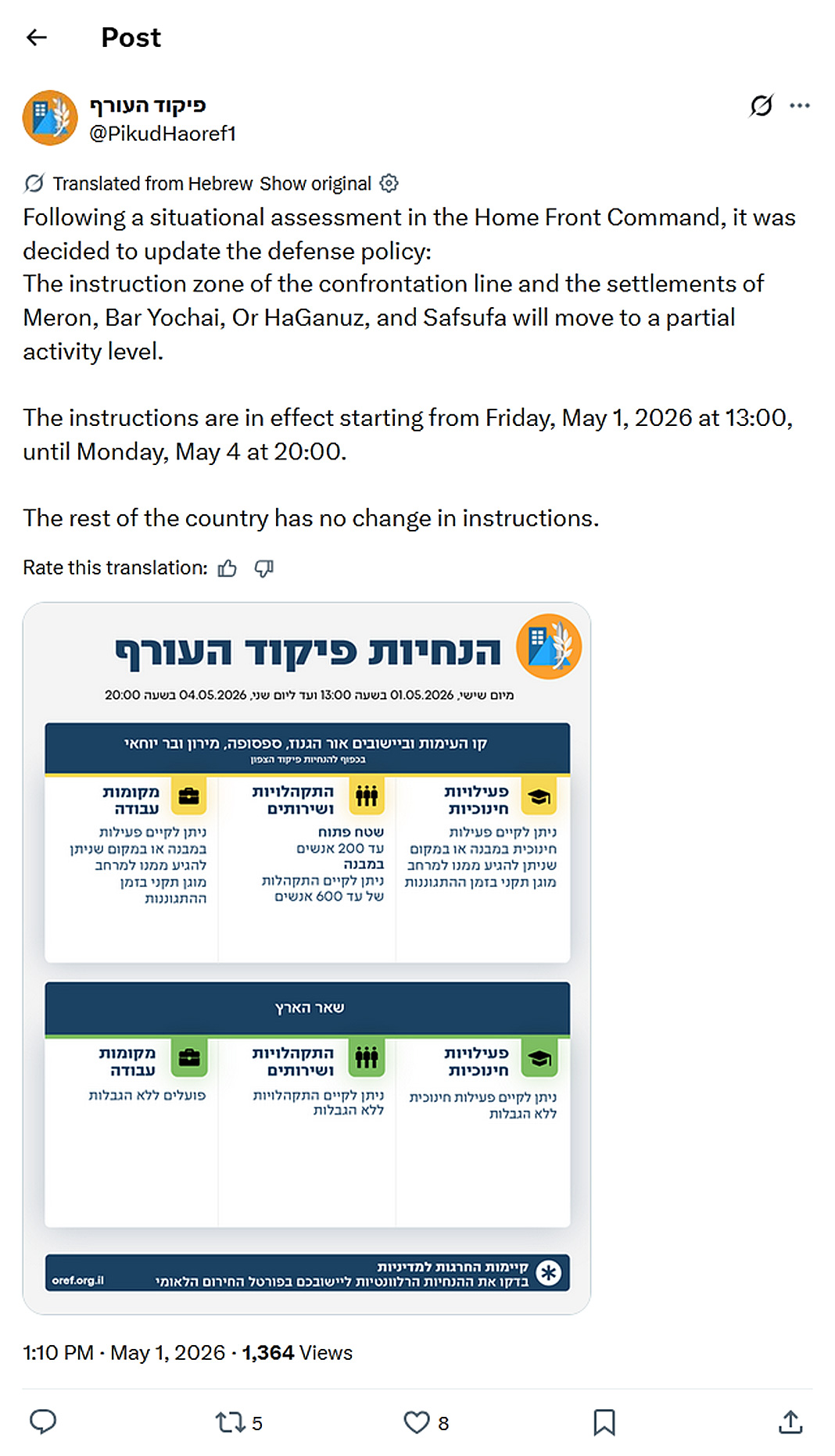 Pikud-HaOref-tweet-1May2026-Meron partial activity level
|
|

Roads to be closed: Police announce cancellation of Lag B’Omer celebrationThe police announced preparations to cancel the Rabbi Shimon Bar Yochai celebration in Meron, following Home Front Command instructions and the Prime Minister’s decision.Israel National News / May 3, 2026, 9:25 AM (GMT+3) / https://www.israelnationalnews.com/news/426447 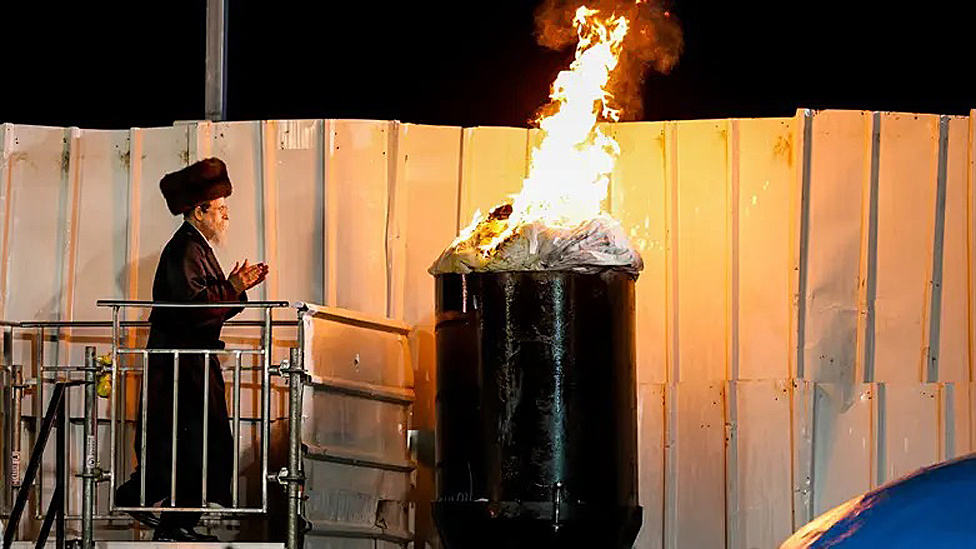 Meron Lag B’Omer celebration David Cohen/Flash90 Police announced preparations for the cancellation of the traditional Rabbi Shimon Bar Yochai Lag B’Omer celebration in Meron, following Home Front Command directives and a decision by the Prime Minister due to the security situation. As part of the preparations, the following roads and sections will be closed today: the Ein Zeitim Junction on Highway 89, the Gush Halav Junction on Highway 89, the Sifsufa Junction on Highway 89, and the Parod Junction on Highway 866.
Additional roads will be closed tomorrow, and all blocked sections are expected to reopen to the general public on May 6, after Lag B’Omer. Police also stated that residents of Meron will be allowed access through the closed sections upon presentation of an ID card.
Following the announcement of the cancellation, a framework was formulated aimed at preserving the traditional Rabbi Shimon Bar Yochai celebration in Meron as much as possible. A draft of the framework was submitted for approval by the relevant authorities, with the intention of managing the events under the strictest possible restrictions.
According to the outline, three ceremonial bonfire lightings will be organized to preserve the tradition: the central lighting ceremony of the Boyan Hasidic Rebbe, a Sephardic communities’ lighting ceremony led by Rabbi Shlomo Moshe Amar, and a lighting ceremony conducted by rabbis from the Religious Zionist community.
Each of the ceremonies, which will take place on the night of the celebration, will be limited to no more than 200 participants arriving in an organized manner through the respective communities conducting the events.
The framework is based on the fact that several thousand people are currently staying legally in the Meron area. As a result, designated compounds will be operated to manage the crowds, including the tomb area and the Bnei Akiva and Or HaRashbi compounds.
Stewards will operate around the tomb site to allow those present to pray safely, while the traditional orchestra will perform in the courtyard near the tomb cave.
Despite the creation of the framework for managing those already on the mountain, officials emphasized that no additional public access to Meron will be allowed – neither by private vehicles nor by public transportation, including rabbis and public figures. The general public will be able to follow the events through live broadcasts from the lighting ceremonies and the tomb courtyard throughout the day of the celebration.
The framework is expected to remain in effect as long as public order is maintained at the site and civilian management of the event remains possible. It remains subject to Home Front Command restrictions and police directives.
Officials involved in drafting the outline stated that the primary goal is to preserve the tradition while ensuring the safety of those present at the site.
|